Cast Iron

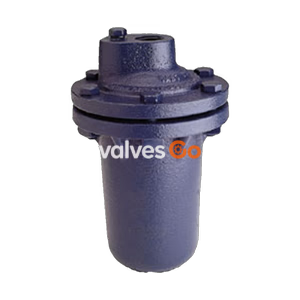
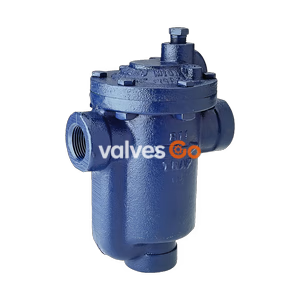
Armstrong 401-SH and 501-SH inverted bucket steam traps feature a unique accumulation chamber designed for superheated steam and high pressure/low load service.
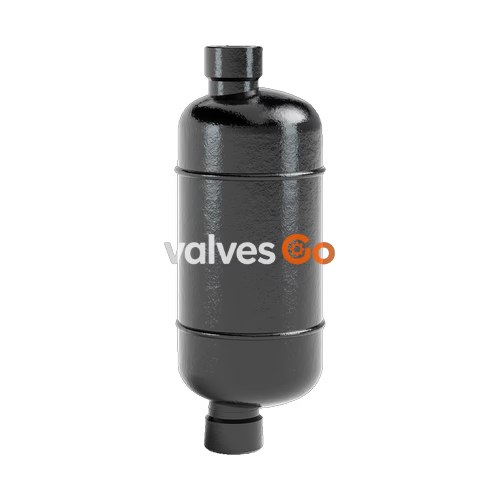
Armstrong 401-SH and 501-SH Series inverted bucket steam traps are specifically designed to overcome the difficult combination of superheat and high pressure/low load service. To survive this severe steam service, Armstrong created an inverted bucket trap with a unique accumulation chamber. The chamber collects sufficient condensate to ensure full discharge cycles. A cup in the chamber floats up and down on the steam inlet tube, sealing it off as the condensate level rises. At the same time as the chamber collects condensate, steam continues to flow under the bucket, making sure that the discharge valve closes tightly until the condensate rises into the trap body and the bucket falls down. The operation is on/off, with no throttling or dribbling.
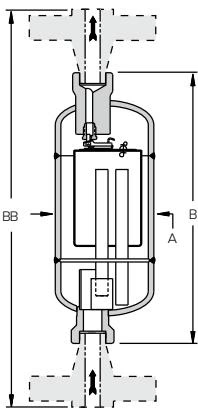
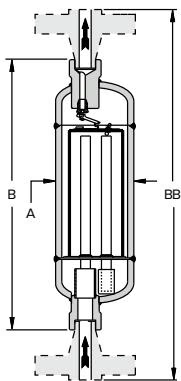
Furthermore, it combines all the advantages of an inverted bucket steam trap:
| Model | 401-SH | 501-SH |
|---|---|---|
| Pipe Connections (in) | 1/2, 3/4 | 1/2, 3/4 |
| Pipe Connections (mm) | 15, 20 | 15, 20 |
| "A" Diameter (NPT, BSPT or SW) | 4 in (100 mm) | 4 in (100 mm) |
| "B" Height (NPT, BSPT or SW) | 11 in (275 mm) | 13-9/16 in (344 mm) |
| "C" Diameter (Flanged) | 4-5/8 in (117 mm) | 4-3/4 in (121 mm) to 5-1/8 in (130 mm) |
| "D" Height (Flanged) | 15-1/8 in (384 mm) | 18-3/16 in (462 mm) to 18-11/16 in (475 mm) |
| Weight NPT, BSPT or SW | 12 lb (5.5 kg) | 15 lb (7 kg) |
| Weight Flanged | 15 lb (6.7 kg) | 29 lb (13 kg) |
Trap Draining Drip Leg on Steam Main With the steam feed tube to the trap chamber sealed, condensate flows through the condensate feed tube (from accumulation chamber) into the trap chamber. This sinks the inverted bucket, which opens the discharge valve, cycling the trap.
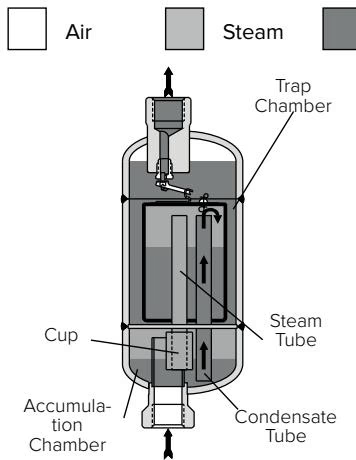
Cycling – Discharge Valve Wide Open
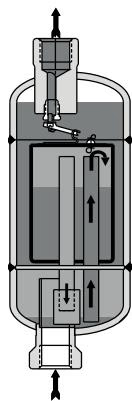
Cycle Ending As the level of condensate in the accumulation chamber falls, the cup sealing the steam feed tube moves downward, opening a passage for steam to flow into the trap chamber.
Trap Closed As steam begins to flow through the accumulation chamber and up the steam feed tube under the inverted bucket in the trap chamber, the discharge valve closes tightly.
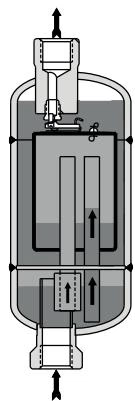
Cycle About to Repeat As the level of condensate rises in the accumulation chamber, the cup floats up until it again seals the steam feed tube, and the cycle repeats.
What little condensate there is on superheat and high pressure/low load service usually forms in drip legs and in the traps themselves. Therefore proper piping and drip legs of adequate size and diameter are essential for the successful operation of the Armstrong superheat trap.
Drip Leg Sizing
The properly sized drip leg will capture condensate. Too small a drip leg can actually cause a venturi “piccolo” effect where pressure drop pulls condensate out of the drip leg and trap.
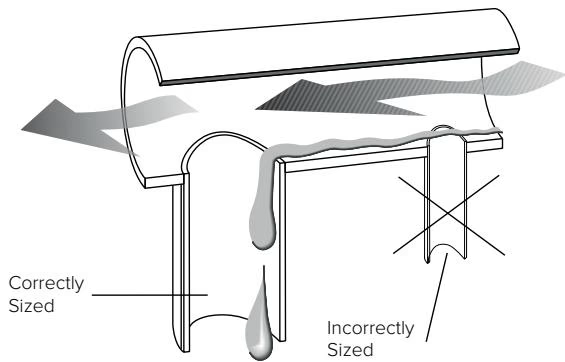
Recommended Steam Main and Branch Line Drip Leg Sizing
| Steam Main Size (in) | Drip Leg Diameter (in) | Supervised Warm-Up Min Length (in) | Automatic Warm-Up Min Length (in) |
|---|---|---|---|
| 1/2 | 1/2 | 10 | 28 |
| 3/4 | 3/4 | 10 | 28 |
| 1 | 1 | 10 | 28 |
| 2 | 2 | 10 | 28 |
| 3 | 3 | 10 | 28 |
| 4 | 4 | 10 | 28 |
| 6 | 4 | 10 | 28 |
| 8 | 4 | 12 | 28 |
| 10 | 6 | 15 | 28 |
| 12 | 6 | 18 | 28 |
| 14 | 8 | 21 | 28 |
| 16 | 8 | 24 | 28 |
| 18 | 10 | 27 | 28 |
| 20 | 10 | 30 | 30 |
| 24 | 12 | 36 | 36 |
Insulation Warning
Because insulation reduces the condensate available to the trap for the maintenance of the water seal, leave the trap and 2-3 feet of inlet piping uninsulated. This will help extend trap life. If personnel protection is required, install a wire cage.
Whenever a trap fails to operate and the reason is not readily apparent, the discharge from the trap should be observed. If the trap is installed with a test outlet or discharges to atmosphere, this will be a simple matter - otherwise, it will be necessary to break the discharge connection.
Cold Trap - No Discharge
Hot Trap - No Discharge
Steam Loss If the trap leaks or blows live steam, trouble may be due to:
Continuous Flow
Explore similar products in our catalog