Ductile Cast Iron

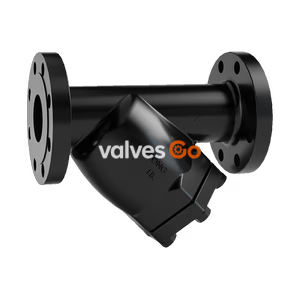
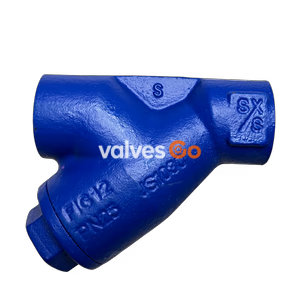
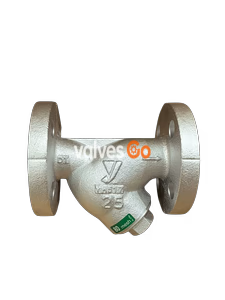
Yoshitake SY-17 strainer with cast stainless steel body, standard 80 mesh, 2.0 MPa maximum pressure. Suitable for steam, air, water, and oil applications.
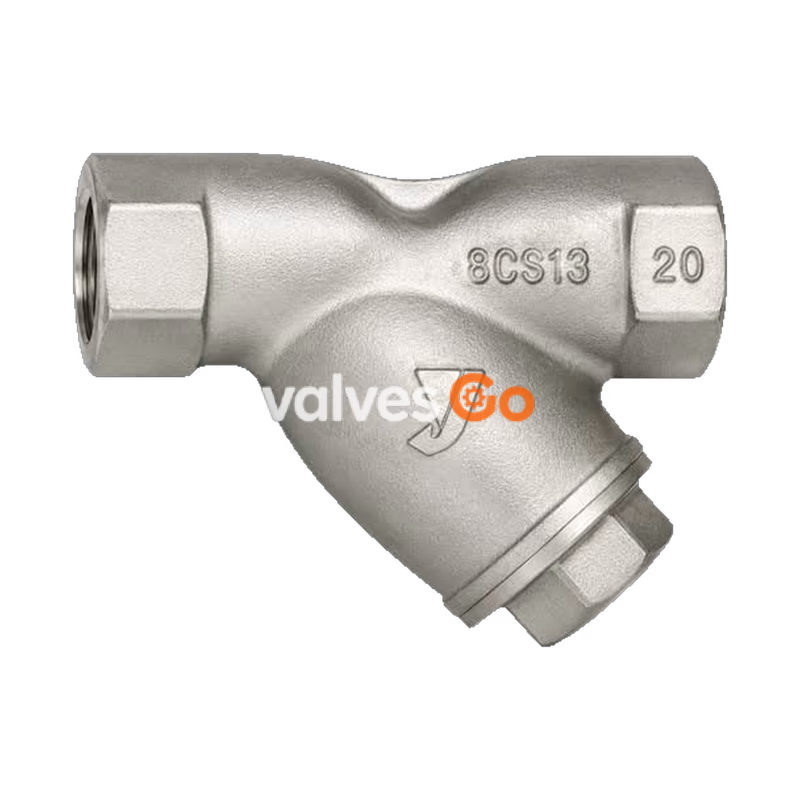
Yoshitake SY-17 is a high-flow-rate marine type strainer featuring a cast stainless steel body. Designed for a wide variety of applications such as food and chemical industries, and oil, this strainer ensures a large filtration area to minimize flow rate decrease caused by clogging.
| Model | SY-17 | SY-37 (Strainer with fine mesh) |
|---|---|---|
| Application | Steam, Air, Cold and hot water, Oil, Other non-dangerous fluids | Steam, Air, Cold and hot water, Oil, Other non-dangerous fluids |
| Maximum pressure | 2.0 MPa | 2.0 MPa |
| Maximum temperature | 100°C * | 100°C * |
| Body material | Cast stainless steel (SCS13) | Cast stainless steel (SCS13) |
| Screen material | Stainless steel (SUS304) | Stainless steel (SUS304) |
| Screen perforation | φ2.5 – 4P | φ2.5 – 4P |
| Screen mesh | Standard 80 mesh | 120 to 200 mesh |
| Gasket | PTFE * | PTFE * |
| Connection | JIS Rc screwed | JIS Rc screwed |
| No. | Parts Name | Material |
|---|---|---|
| 1 | Body | Cast Stainless Steel (SCS13) |
| 2 | Cap | Cast Stainless Steel (SCS13) |
| 3 | Screen | Stainless Steel (SUS304) |
| 4 | Gasket | PTFE |
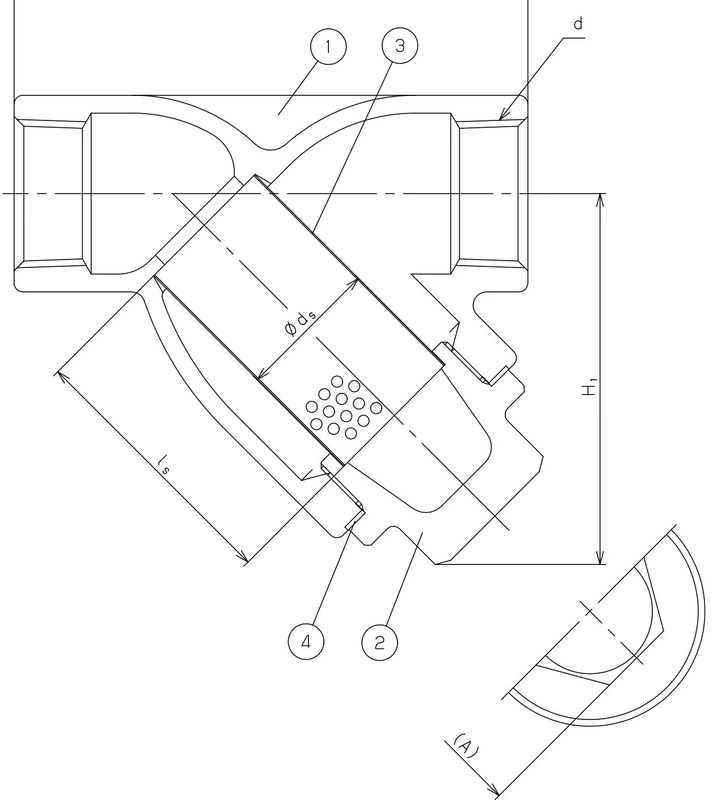
| Nominal size | d (Connection) | L (mm) | H1 (mm) | A (mm) | B (mm) | ds (mm) | ls (mm) | Weight (kg) |
|---|---|---|---|---|---|---|---|---|
| 15A | Rc 1/2 | 85 | 55 | 22 | 30 | 20 (18) | 35 | 0.40 (0.4) |
| 20A | Rc 3/4 | 100 | 69 | 27 | 38 | 25 (23) | 50 | 0.68 (0.7) |
| 25A | Rc 1 | 115 | 83 | 30 | 44 | 32 (30) | 60 | 1.01 (1.1) |
| 32A | Rc 1-1/4 | 135 | 92 | 36 | 54 | 40 (38) | 70 | 1.48 (1.6) |
| 40A | Rc 1-1/2 | 150 | 102 | 41 | 60 | 45 (43) | 75 | 1.88 (2.0) |
| 50A | Rc 2 | 180 | 117 | 46 | 75 | 56 (54) | 90 | 3.34 (3.6) |
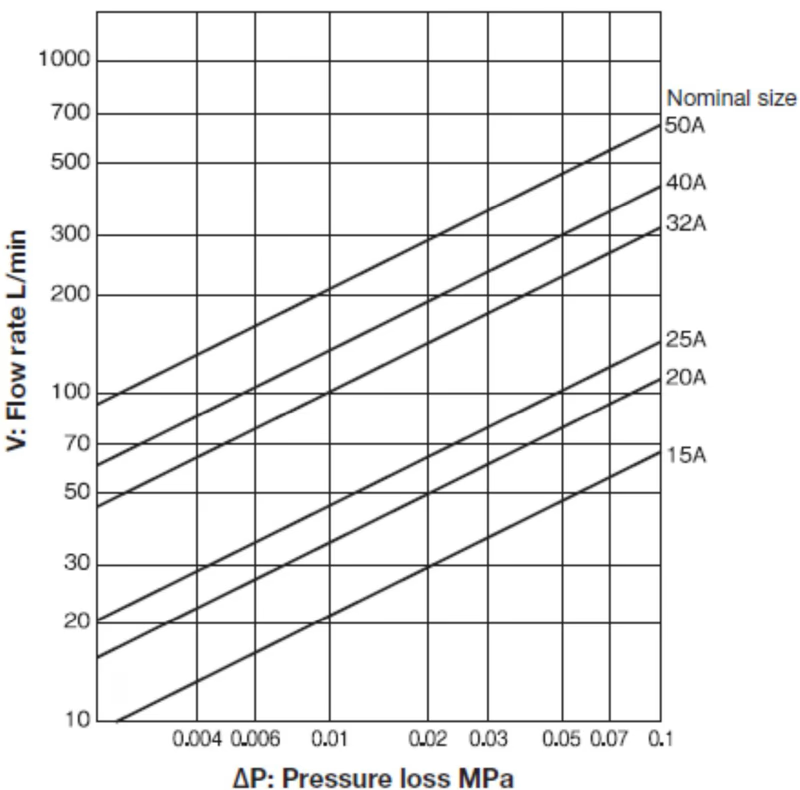
To make the best use of the strainer and satisfy operating requirements to the maximum, note the following: Select a strainer of the same nominal size as that of the pipe (nominal size of piping = nominal size of strainer). Using a strainer of a smaller nominal size increases the pressure loss and may result in the pressure falling below the specified level.
Based on JIS F 7101 "Shipbuilding - Pipes of machinery - standard velocity of flow":
| Fluid | Remarks | Standard flow velocity (m/s) |
|---|---|---|
| Saturated steam | Auxiliary piping for vacuum or small-diameter | 15 [10-20] |
| Saturated steam | Large-diameter piping | 30 [20-40] |
| Superheated steam | Piping diameter: approx. Φ75 – Φ250 | 40 [30-50] |
| Superheated steam | Piping of high-grade material | 70 [65-80] |
| Superheated steam | Inlet of steam coil | 30 [25-30] |
| Air | Higher pressure: 1.0 MPa or more | 20 [20-25] |
| Air | Lower pressure | 15 [5-15] |
| Air | Extremely low pressure: 0.1 MPa or less | 10 [3-10] |
| Water, Oil | —— | 2 [2-4] |
Precaution for Installation
Precaution for Operation
Piping Examples
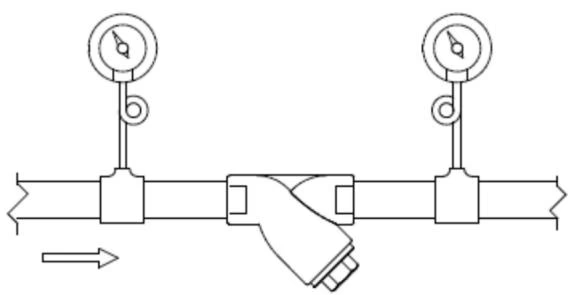
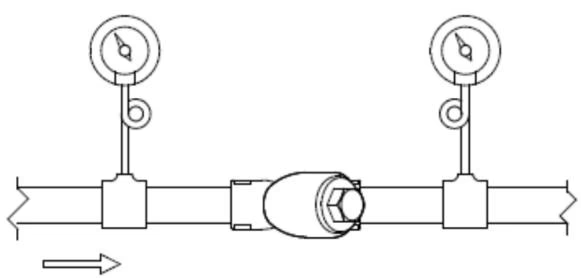
Excessive amounts of foreign substances reduce the filtration area and hamper fluid flow, potentially damaging the screen.
Disassembly and Inspection
Completely discharge the pressure inside the product, piping, and equipment prior to disassembly. When fluid is hot, cool down the product to prevent scalds or injury from residual pressure.
Yoshitake Instrumentation / Strainers
SY, SU, SW, and ST series strainers for removing line debris and protecting downstream valves and equipment.