Size 15

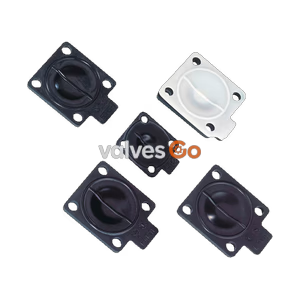
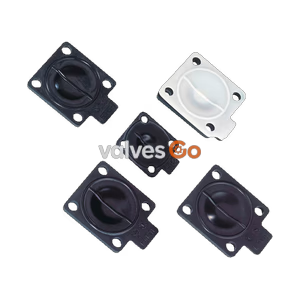
Burkert 677690 Type SV02 replacement diaphragm for industrial valves. Features FKM (fluor rubber) construction, size 50, and a temperature range of 0°C to 130°C.
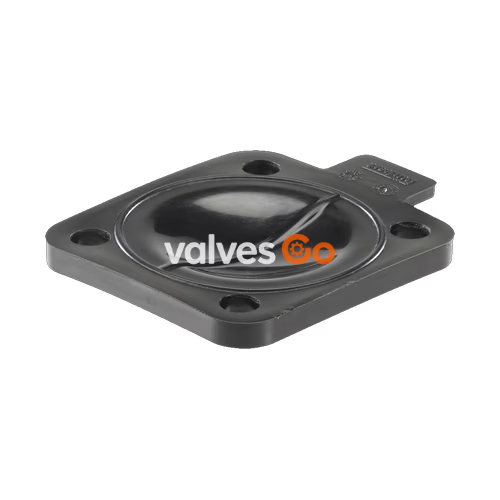
BURKERT 677690 Type SV02 is a replacement diaphragm packed for industrial valve applications. This size 50 diaphragm is constructed from FKM (fluor rubber) and is designed to operate within a medium temperature range of 0 °C to 130 °C.
Elastomer parts could lose their eponymous features as storage time progresses. These changes happen based on various influencing factors such as light, heat, ozone, humidity, deformation, oxygen, oils and solvents. International standards such as DIN 7716 or ISO 2230 Basic illustrate basic instructions for correct storage.
Correct storage is an important factor in the operating life of elastomers especially for highly stressed components (e.g. diaphragms).
Storage Conditions
| Raw Material | Storage Period (max.) |
|---|---|
| EPDM | 7 years |
| NBR | 5 years |
| FKM | 7 years |
| FFKM | 7 years |
| Butyl | 5 years |
| CR | 6 years |
| CSM | 7 years |
Based on the above, the following is the expected life cycle for diaphragms.
| Raw Material | Storage Period (max.) | Operating Time (max.) |
|---|---|---|
| EPDM | 7 years | 3 years |
| FKM | 7 years | 4 years |
| PTFE or advanced PTFE | 10 years | 3 years |
Explore similar products in our catalog