
PN25

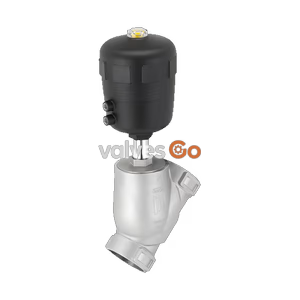
BURKERT Type 2920 manual 2/2-way angle seat valve (SKU 20110610). Features a flow-optimised stainless steel body, PTFE seat seal, and robust plastic actuator. Supports 0-24 bar and -10°C to 185°C.
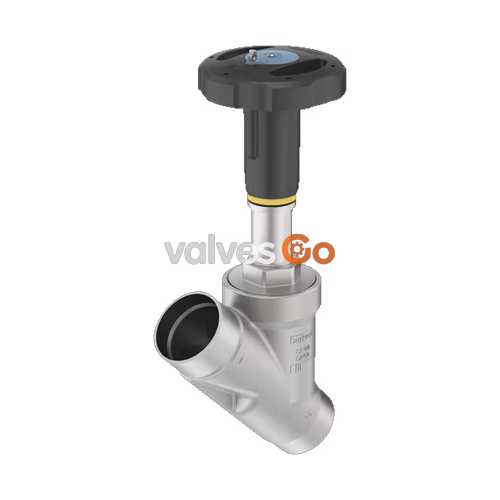
BURKERT Type 2920 (SKU 20110610) is a manually operated 2/2-way angle seat valve consisting of a manual actuator and a 2-way body made of high-quality stainless steel. With a flow-optimised valve body, the manually operated valve offers diverse usage options to shut off both neutral and aggressive gaseous and liquid media. The tried-and-tested self-adjusting packing gland guarantees optimal tightness and enables low-maintenance operation, even at high switching cycles. Depending on the application, the soft PTFE or PEEK seal ensures a reliable valve seat seal under challenging operating conditions.
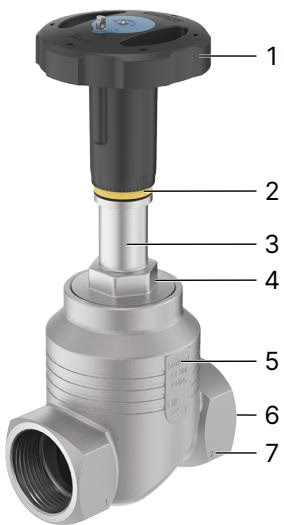
The actuator is made of high-quality plastic (Polyphenylene sulfide) and is suitable for use in demanding environments. It possesses a visual position indicator and can be optionally equipped with stroke limitation and locking.
The product family includes Types 2920, 2921, 2960, and 2961, which differ by valve body design and the presence of a control cone.
| Type | Nominal diameter DN | Valve body | Properties |
|---|---|---|---|
| 2920 | 10 to 80 | Angle seat body | Without control cones; for pure shut-off function |
| 2960 | 10 to 65 | Angle seat body | With control cone; with position indicator and scale to set a defined flow rate |
| 2921 | 10 to 100 | Globe body | Without control cones; for pure shut-off function |
| 2961 | 10 to 100 | Globe body | With control cone; with position indicator and scale to set a defined flow rate; with screwed-in valve seat that can be replaced to reduce the seat size |

| Property | Value |
|---|---|
| Design | Angle seat valve on/off |
| Nominal diameter | DN 10...DN 80, NPS 3/8...NPS 3 |
| Flow direction | Flow to open (below seat) |
| Operating pressure | 0 bar(g)...25 bar(g) |
| Nominal pressure | PN 25 (DIN EN 1333), Class 150 (DIN EN 1759) |
| Seat leakage | Leakage rate A (DIN EN 12266-1), seat seal PTFE and PEEK, test medium air |
| Operating medium | Steam, water, neutral gases, alcohols, oils, fuels, hydraulic fluids, salt solutions, alkalis, organic solvents |
| Medium temperature | -40 °C...+230 °C |
| Ambient temperature | -10 °C...+60 °C |
| Viscosity | Max. 600 mm²/s |
| Installation position | As required, preferably with actuator upright |
| Element | Material |
|---|---|
| Cover | Polyamide (PA) |
| Screw | Stainless steel 1.4301 |
| Lock pin | Stainless steel 1.4305 |
| Handwheel | Polyphenylene sulfide (PPS) |
| Optical position indicator | Polyamide (PA) |
| Packing gland | PTFE V-rings (filled), with spring compensation |
| Spindle | Stainless steel 1.4401 (316)/1.4404 (316L) |
| Spindle guide | DN 15...DN 50: PEEK; DN 65...DN 80: Stainless steel 1.4401 (316)/1.4404 (316L) |
| Body seal | Graphite |
| Swivel plate | Stainless steel 1.4401 (316)/1.4404 (316L) |
| Seat seal | PTFE or PEEK |
| Valve body | Stainless steel 316L/CF3M |
By manually overriding the handwheel, the force is transmitted via a spindle and the valve is opened or closed. Turning the handwheel anticlockwise opens the valve, turning it clockwise closes it.
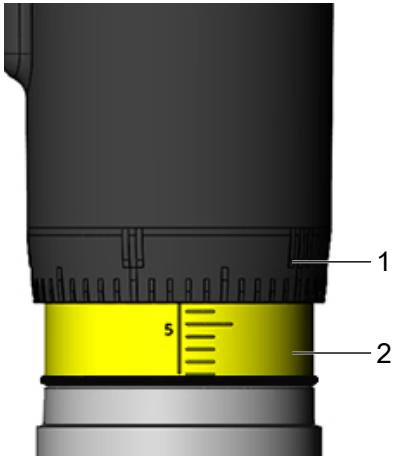
When turning the handwheel anticlockwise, the reproducible stroke scale becomes visible between the position indicator and the handwheel. The scale on the handwheel determines the rotation position of the handwheel (50 positions). The reproducible stroke scale shows the relative position of the valve (valve opening) and acts as a fixation point for determining the rotation position.
INFO
The visibility of the stroke scale is not directly correlated with the closed position of the valve. Depending on the valve design, the repeatable stroke scale may not be visible when the valve is open, or be visible when the valve is closed.
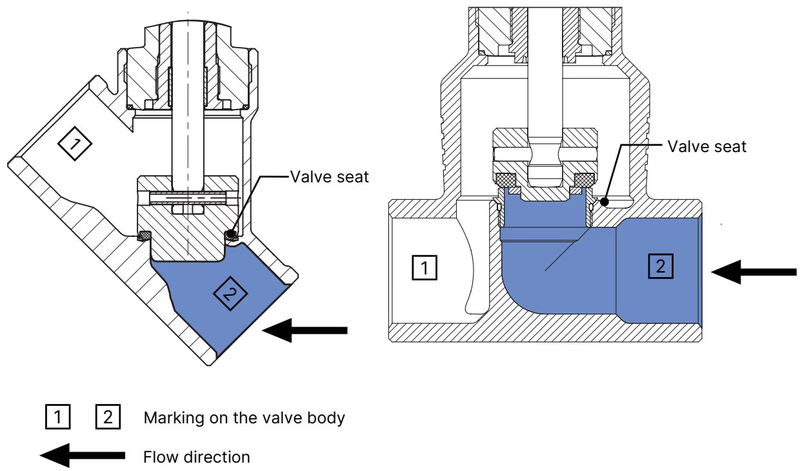
The valve seat is always closed against the medium flow. The flow direction should therefore be set such that the valve reaches the flow beneath the valve seat.
Setting the minimum and maximum stroke limit is possible as an option. An adjusting sleeve is used for this purpose. Both the minimum and the maximum position of the valve can be adjusted via an adjustment sleeve after removing the handwheel.
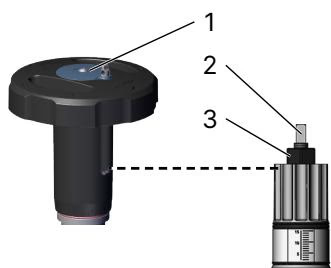
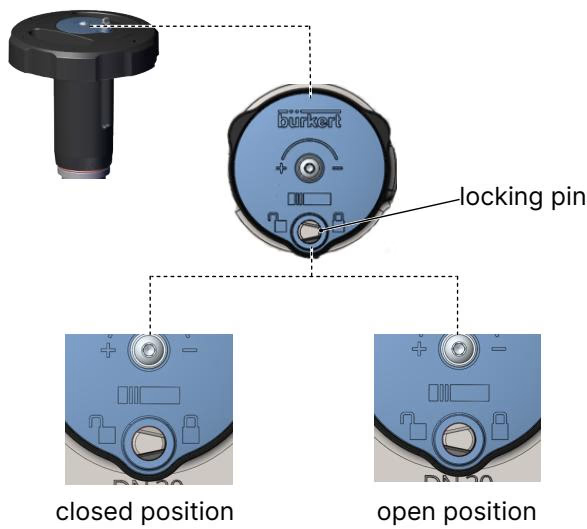
It is also an option to lock the handwheel to prevent unintentional or unauthorised operation of the valve. The locking pin has a bore (Ø 3.8) and can be secured against unauthorised use with a padlock.
WARNING
Risk of injury due to high pressure and escaping medium Switch off the pressure before working on the device or system. Vent or drain the lines.
WARNING
Risk of crushing by mechanically powered parts Do not reach into the openings of the valve body.
When used in accordance with the operating instructions, the actuator of the manually operated valve is maintenance-free. Perform a visual inspection of the device once per year. If leaks occur, replace the respective wearing part. Muddy and abrasive media require correspondingly shorter inspection intervals.
| Troubleshooting | Cause | Elimination |
|---|---|---|
| Valve is not tight | Dirt between seal and valve seat | Install dirt trap |
| Valve seat seal worn | Install new control cone | |
| Flow direction interchanged | Observe the marking for the flow direction on the valve body | |
| Operating pressure too high | Observe pressure specifications on the type label | |
| Valve is leaking on the relief bore | Packing gland worn | Replacing packing gland |
Explore similar products in our catalog