Type 2032

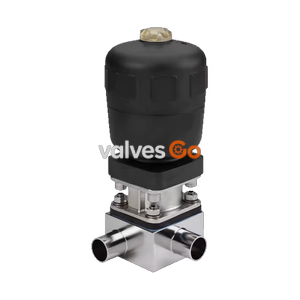
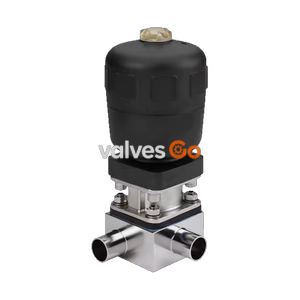
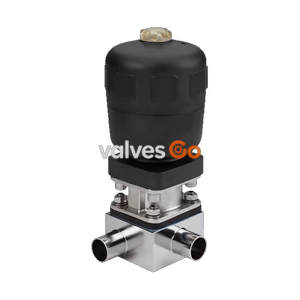
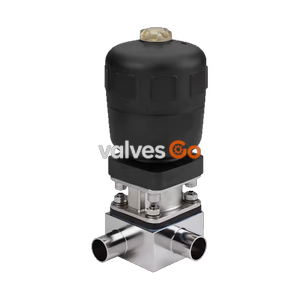
BURKERT 347772 Type 2031 2/2-way pneumatic diaphragm valve. Features PPS actuator, control function A (NC), FKM seal, and 50mm orifice. CIP/SIP capable.
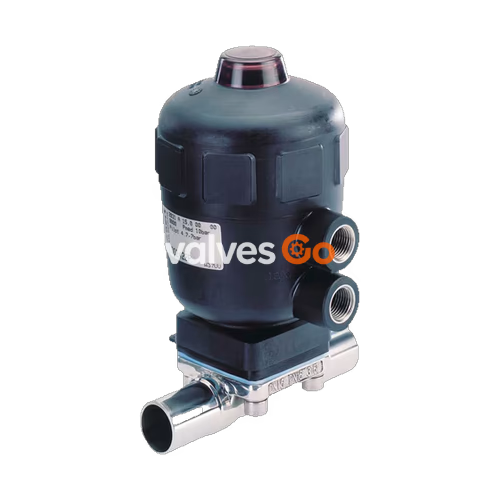
BURKERT 347772 Type 2031 is an externally controlled diaphragm valve consisting of a pneumatically operated piston actuator, a diaphragm, and a 2-way valve body. The proven and robust actuator with a plastic valve body ensures reliable operation in hygienic or aggressive environments. The flow-optimised valve body with minimal dead space enables high volume flow rates and a wide range of possible applications.
The actuator features a compact, autoclavable design (PPS variant) and is equipped with an integrated, optical position indicator as standard. The valve is designed to control the flow of neutral gases and liquids, as well as highly purified, sterile, aggressive, or abrasive media.
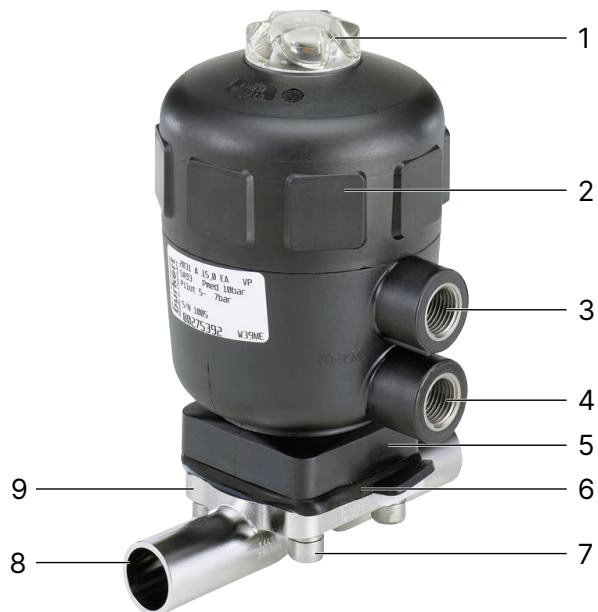
The 347772 variant operates with Control function A (CF A):
Ambient Temperature:
| Actuator housing material | Actuator size | Permissible ambient temperature [°C] |
|---|---|---|
| PPS | ≤80 (F) | +5...+140 |
| PPS | 100 (G), 125 (H) | +5...+90 (short-term up to +140) |
| PA | ≤125 (H) | -10...+60 |
| PA | ≥175 (K) | -10...+50 |
Medium Temperature for Diaphragms: The specified medium temperatures only apply to media that do not attack the diaphragm materials or cause it to swell up. Do not use the diaphragms as a steam shut-off element.
| Diaphragm material | Medium temperature [°C] | Comments |
|---|---|---|
| EPDM (AD) | -10...+143 | Steam sterilisation max. +150°C for 60 min |
| FKM (FF) | 0...+130 | No steam, dry heat max +150°C for 60 min |
| PTFE (EA) | -10...+130 | Steam sterilisation max. +140°C for 60 min |
| Advanced PTFE (EU) | -5...+143 | Steam sterilisation max. +150°C for 60 min |
| GYLON® (ER) | -5...+130 | Steam sterilisation max. +140°C for 60 min |
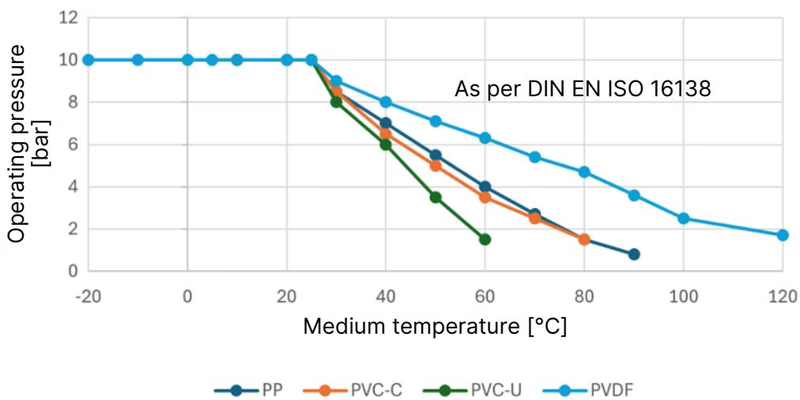
Permissible operating pressure depending on medium temperature in plastic valve body:
WARNING
The information in the pressure-temperature diagram is important for material selection. Observe the permissible operating pressure, depending on the medium temperature!
Risk of bursting due to overpressure
If the device bursts, escaping media may cause injuries, burns or scalds.
Permissible pilot pressure:
| Actuator material | Actuator size | Minimum pilot pressure [bar] | Maximum pilot pressure [bar] |
|---|---|---|---|
| PPS | 40 (C)...125 (H) | 2 | 7 |
| PA | 40 (C)...100 (G) | 2 | 10 |
| PA | 125 (H) | 2 | 7 |
| PA | 175 (K), 225 (L) | 2 | 6 |
The valve can be installed in any position, preferably with the actuator facing up. For leakage detection, one of the relief bores in the diaphragm bonnet for monitoring leakages must be at the lowest position.
The installer and the operator are responsible for ensuring self-draining. The following points must be observed for optimum self-draining:
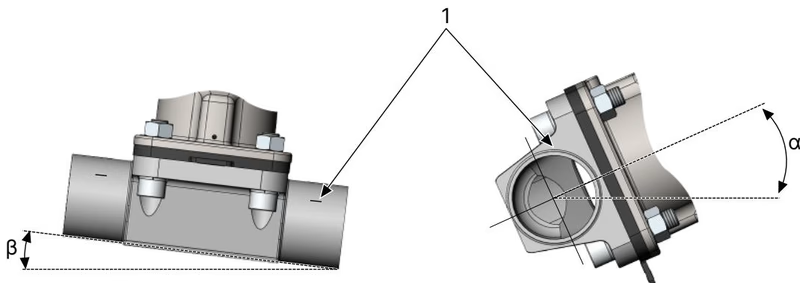
β: Inclination angle of the pipeline | α: Self-draining angle | 1: Marking for self-draining
Explore similar products in our catalog