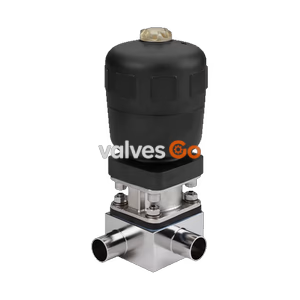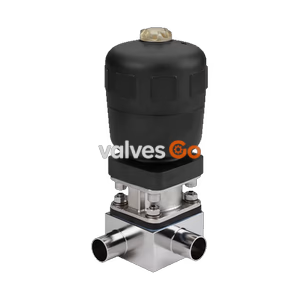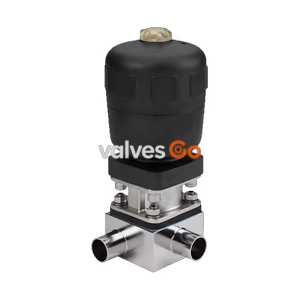
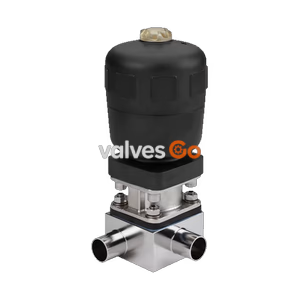
Type 2032

Burkert 20135287 Type 2933 2/2-way manual diaphragm valve. Features a DN 40 clamp connection, forged stainless steel body, and GYLON/EPDM diaphragm for up to 10 bar.
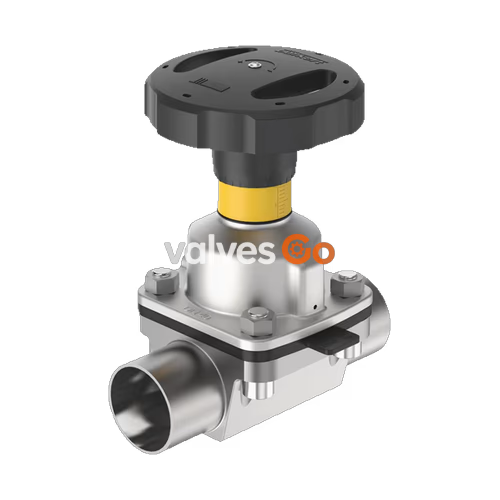
Burkert 20135287 Type 2933 is a 2/2-way manually operated diaphragm valve consisting of a manual actuator, a GYLON®/EPDM laminated diaphragm, and a forged stainless steel 2-way valve body. The manual actuator features a plastic handwheel suitable for hygienic or aggressive ambient conditions. The flow-optimized valve body with minimum dead space enables high flow values (Kv value 37.5 m³/h for water). The actuator has a compact, autoclavable design and is equipped with an integrated visual position indicator, a reproducible stroke scale, and an adjustable closing limiter.
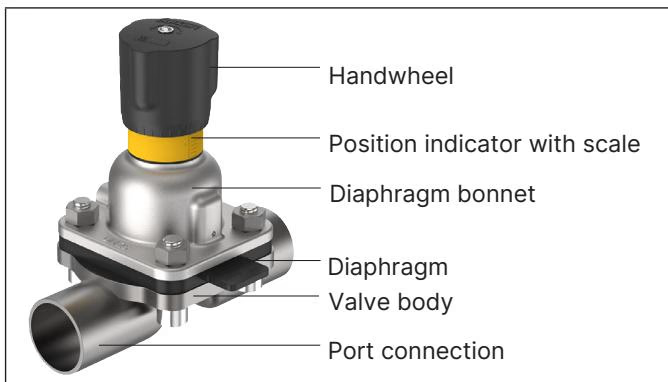
| Product Properties | Specification |
|---|---|
| Forged steel valve body (VS) | Forged stainless steel 1.4435 in accordance with BN2 DIN EN 10222-5, F316L in accordance with ASTM A182/A182M and 316L in accordance with ASME BPE |
| Diaphragm | Laminate of GYLON® and EPDM (ER) |
| Actuator | Polyphenylene sulphide (PPS) handwheel, stainless steel 1.4308 diaphragm bonnet |
| Diaphragm size | 40 |
| Standard surface quality | Internally electrically polished: Ra ≤ 0.38 μm (ASME BPE SF4 / DIN HE4) |
| Medium temperature | -5 °C to +130 °C (steam sterilisation max. +140 °C for 60 min) |
| Nominal diameter | DN 40 (NPS 1 1/2) |
| Clamp connection | ASME BPE / BS4825-3 (38.1x1.65 Cl: 50.5) |
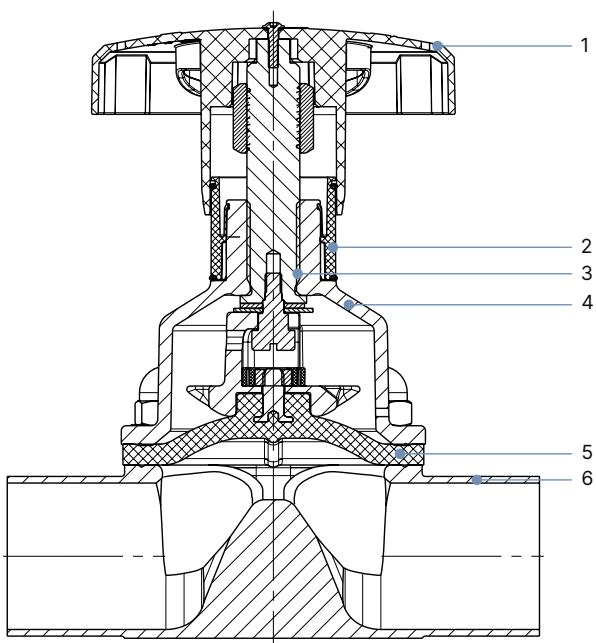
| No. | Element | Material |
|---|---|---|
| 1 | Handwheel | Polyphenylene sulphide (PPS), stainless steel 1.4308 |
| 2 | Visual position indicator | Polyamide (PA), Stainless steel 1.4305 |
| 3 | Valve spindle | Stainless steel 1.4305 |
| 4 | Diaphragm bonnet | Stainless steel 1.4308, polyphenylene sulphide (PPS) |
| 5 | Diaphragm | Laminate of GYLON® and EPDM (ER) |
| 6 | Valve body | Forged stainless steel 316L/1.4435 BN2 |
| Position open | Position closed |
|---|---|
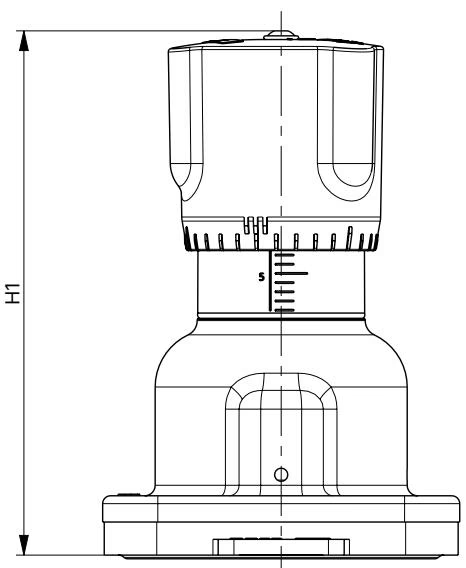 | 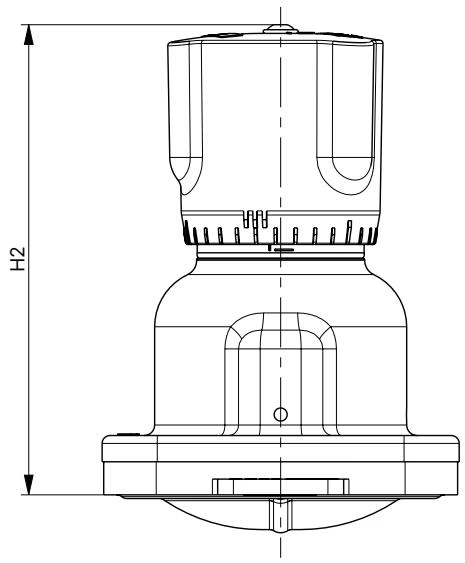 |
For diaphragm size 40:
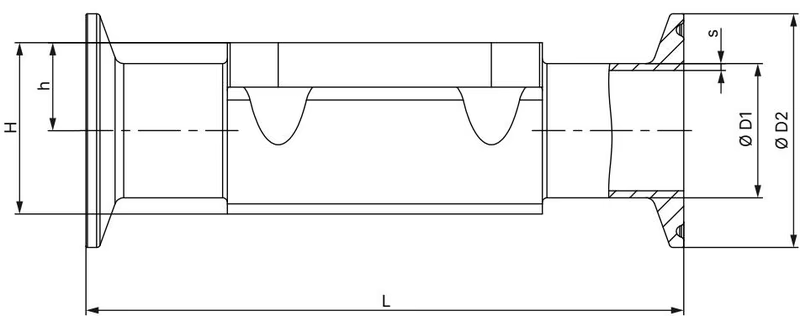
ASME BPE Dimensions (Diaphragm Size 40, DN 40 / 1 1/2 inch):
For the forged steel valve body (VS) with ASME BPE clamp connection (Diaphragm size 40, 1 1/2 inch), the Kv value for water is 37 m³/h. Measurement at +20 °C, 4 bar at valve inlet and 3 bar at valve outlet.
WARNING
The following tightening torques refer to static media pressures. Excessive torque can shorten the service life of the diaphragm.
For diaphragm size 40 with GYLON®/EPDM diaphragm:
TIP
It is the responsibility of the installer and the operator to ensure self-draining. The angle of inclination should correspond to the angle of inclination of the pipeline according to the valid ASME BPE.
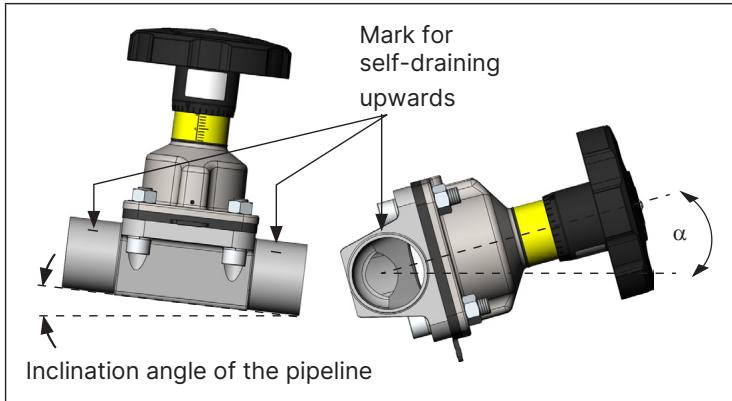
The marking on the port connection of the valve body serves as an orientation aid and must point upwards. The actual self-draining angle must be set with a suitable measuring tool.
Explore similar products in our catalog