PN16

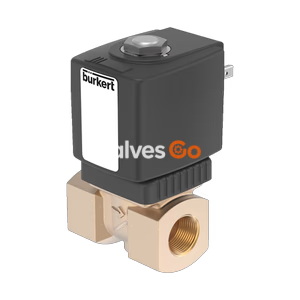
Burkert 20108542 Type 6518 3/2-way normally closed pneumatic solenoid valve. Features 8mm orifice, G 1/4 internal thread, brass body, 110V, and 1-10 bar range.
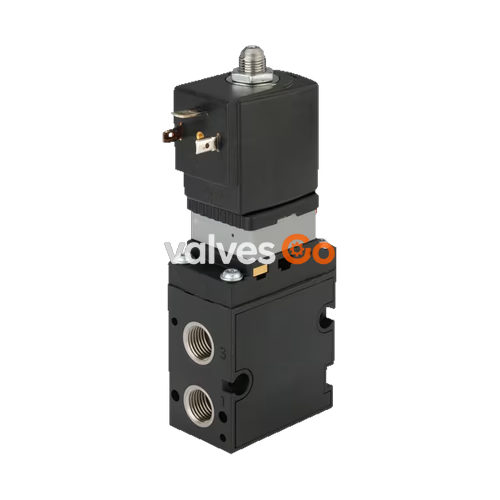
BURKERT 20108542 Type 6518 is a servo-assisted 3/2-way pneumatic solenoid valve designed for high flow-rate capacity and reduced power consumption. This specific model features a normally closed (Circuit Function C) configuration, an 8.0 mm orifice, and G 1/4 internal thread connections. Constructed with a brass body and polyamide pilot control, it operates at 110 V with a pressure range of 1 to 10 bar. The valve works without continuous air consumption and is used for the pneumatic control of double or single-acting actuators.
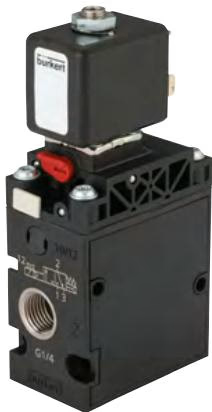
| Feature | Value |
|---|---|
| Orifice | 8.0 mm |
| Circuit Function | C (Normally closed) |
| Body Material | Brass |
| Seal Material | NBR, PUR |
| Port Connection | G 1/4 Internal thread |
| Operating Voltage | 110 V |
| Pressure Range | 1 to 10 bar |
| Flow Rate (QNn) | 1300 l/min |
| Medium Temperature | -10 °C to +55 °C |
| Ambient Temperature | -25 °C to +55 °C |
| Electrical Connection | Plug pattern form A (DIN EN 175301-803) |
| Degree of Protection | IP65 (with correctly connected cable plug) |
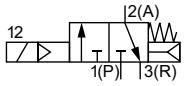
Circuit Function C (CF C) 3/2-way solenoid valve, servo-controlled, normally closed.
INFO
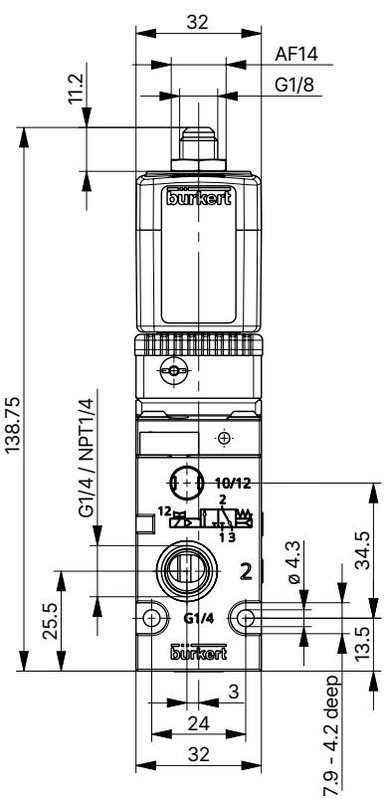
Dimensions are in mm. The standard variant 3/2-way valve is shown below.
WARNING
Risk of injury due to high pressure and escaping medium. Switch off the pressure before working on the device or system. Vent or empty the lines.
Explore similar products in our catalog