
Tube FittingsAlloy 400
 Product category
QTM2, QTM4 and QTM8 flush-valve quick-connect guide covering PTFE seals, 316 SS and Alloy 400, flow, spillage, keys, protectors and ordering.
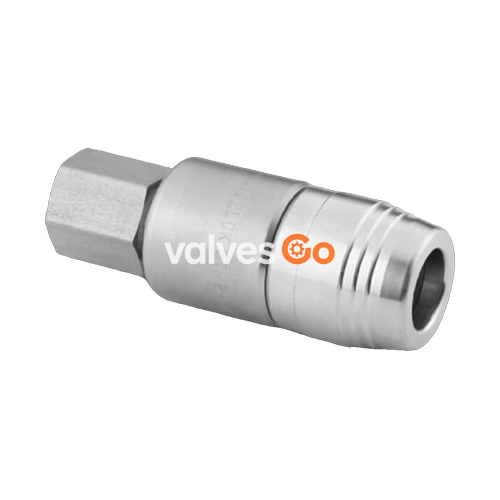
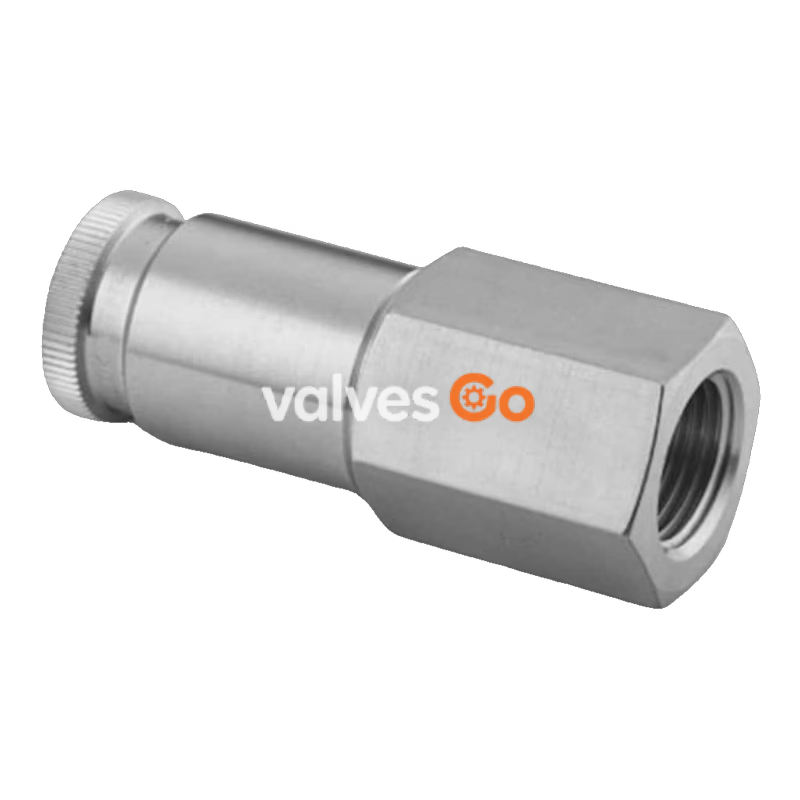

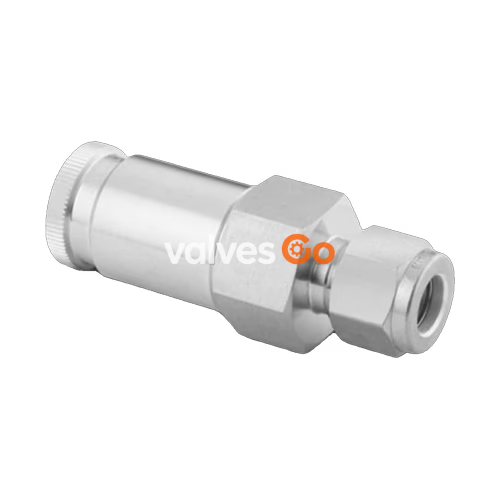
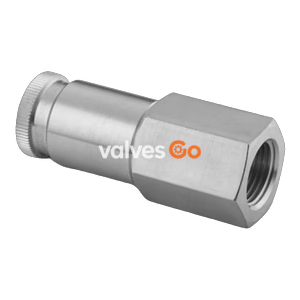
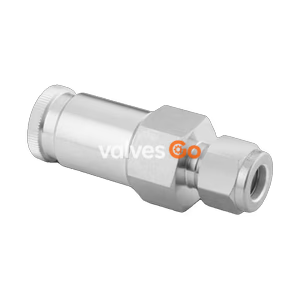
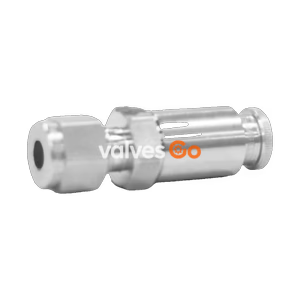
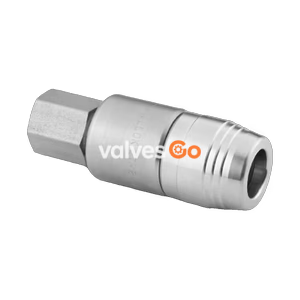
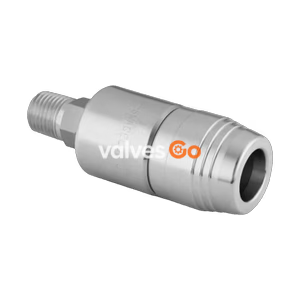
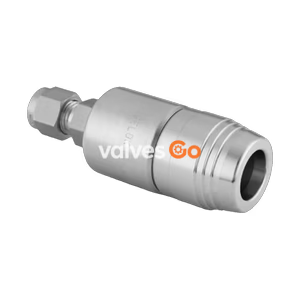
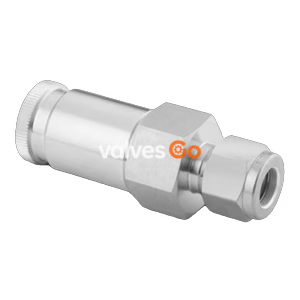
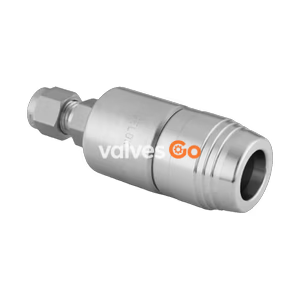
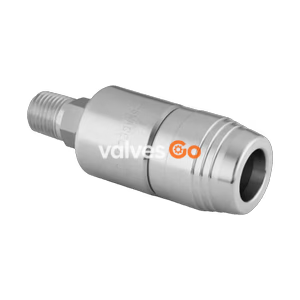
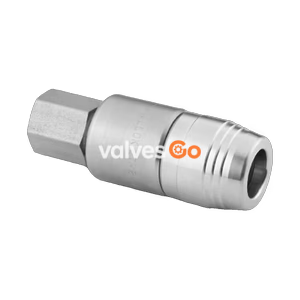
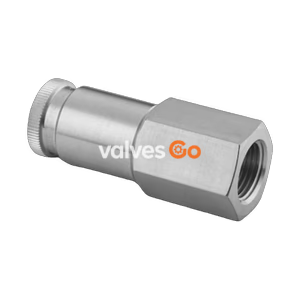
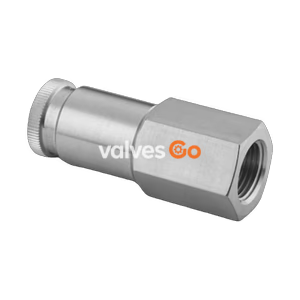
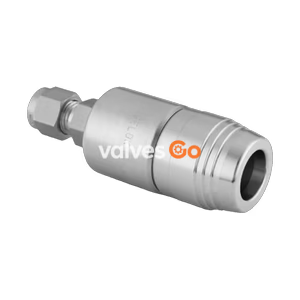
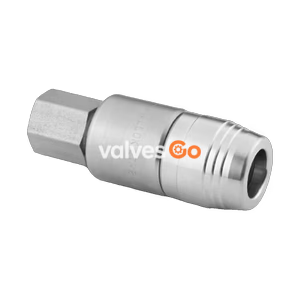
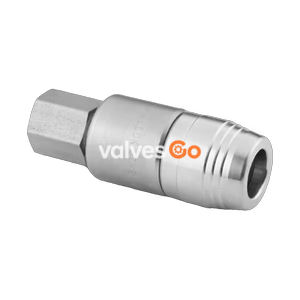
The QTM family combines a flush-valve architecture with recessed PTFE seals. It is available in QTM2, QTM4 and QTM8 sizes and is described against ANSI B93.51M qualification principles in MS-01-138. The flush faces help reduce trapped volume and make disconnected surfaces easier to wipe, while the recessed seals are protected from direct handling damage.
QTM is the series to review when media compatibility, reduced spillage, high flow and positive line identification are more important than the elastomer-sealed architecture of QC or QM. Push-to-connect operation and keyed configurations support repeated use in process, test and utility stations.
Cataloged body materials include:
SS prefix.M prefix in website models such as M-QTM2A-B-4PF.The valve design uses modified or virgin PTFE seals, depending on component and configuration. PTFE broadens chemical and temperature capability, but compatibility must still be checked for permeation, cold flow, thermal cycling and the complete wetted-material set. The A within some model numbers is part of the catalog configuration and must not be omitted when matching a body and stem.
| Size | Maximum recommended water flow | Spillage | Air inclusion |
|---|---|---|---|
| QTM2 | 15 US gal/min (56 L/min) | 0.1 cm³ | 0.1 cm³ |
| QTM4 | 35 US gal/min (130 L/min) | 0.2 cm³ | 0.4 cm³ |
| QTM8 | 50 US gal/min (180 L/min) | 1.0 cm³ | 2.0 cm³ |
These reference values help compare sizes. Actual system flow depends on both end connections, fluid properties and downstream restrictions.
QTM ratings vary by size, material, coupled/uncoupled state and temperature. MS-01-138 includes separate rows for operation from approximately 0 to 120 °F and from 120 to 350 °F, plus distinct coupling/uncoupling limits at 70 °F. High-temperature values can be substantially lower than room-temperature coupled ratings.
Therefore, specify all four conditions independently:
The catalog's coupling/uncoupling limits decrease as size increases, so do not apply a QTM2 operating procedure to QTM4 or QTM8. The end connection or attached hose may impose a lower rating.
Mechanical keys prevent unlike circuits from fully coupling. This is useful for separating gases, pressure levels, cleaning fluids or test media. The catalog maps keys to colors:
| Key | Color | Key | Color |
|---|---|---|---|
| K1 | Black | K5 | Blue |
| K2 | Orange | K6 | White |
| K3 | Green | K7 | Purple |
| K4 | Yellow | K8 | Brown |
QTM2 and QTM4 list K1 through K8. QTM8 is limited to K1 through K4. Both halves must have the same size and key. A model ending in K3, for example, must mate with the corresponding K3 component—not simply another QTM of the same nominal size.
Examples in the product dataset include SS-QTM2-D-4PF, SS-QTM2-D-4PMK3, SS-QTM2A-B-4PMK5, and M-QTM2A-B-4PF.
SS or M selects 316 stainless steel or Alloy 400.QTM2, QTM4 or QTM8 selects the family size.B, S or D identifies the cataloged body/stem and valve arrangement.4PF, 4PM, 6M0, 8M0 or 1610 identify specific thread or tube connections.K1 to K8 adds the allowed key configuration.Always copy the complete number from the table or an existing nameplate. Do not assemble an ordering number from memory when material, key or connection compatibility is safety-critical.
Body and stem protectors limit contamination and impact damage while uncoupled. They are not pressure caps. The manual also describes a release-button option for configurations where the operating method or installation position benefits from controlled sleeve release. Check access, glove clearance and accidental-release risk before specifying it.
Record process medium, concentration and cleaning method; QTM2/QTM4/QTM8 size; 316 SS or Alloy 400; exact body and stem arrangement; end connections; maximum and minimum temperature; coupled, uncoupled and transition pressures; required water flow or Cv; acceptable spillage and air inclusion; key/color; protector and release-button needs; and certification or packaging requirements. Finalize the model using the PDF tables.
Open a model page for specifications, connection options and technical documents.